
The Briefing
THE LABORA COLLECTIVE · A DIOSA ARA INITIATIVE

THE ECONOMIC BODY / SEND 2
THE BRIEFING · {{current_date_full}} · THE DEEP DIVE
SEND 2 OF 21
What people think happens
The officer went to dinner.
DR. YAMICIA CONNOR, MD, PHD, MPH
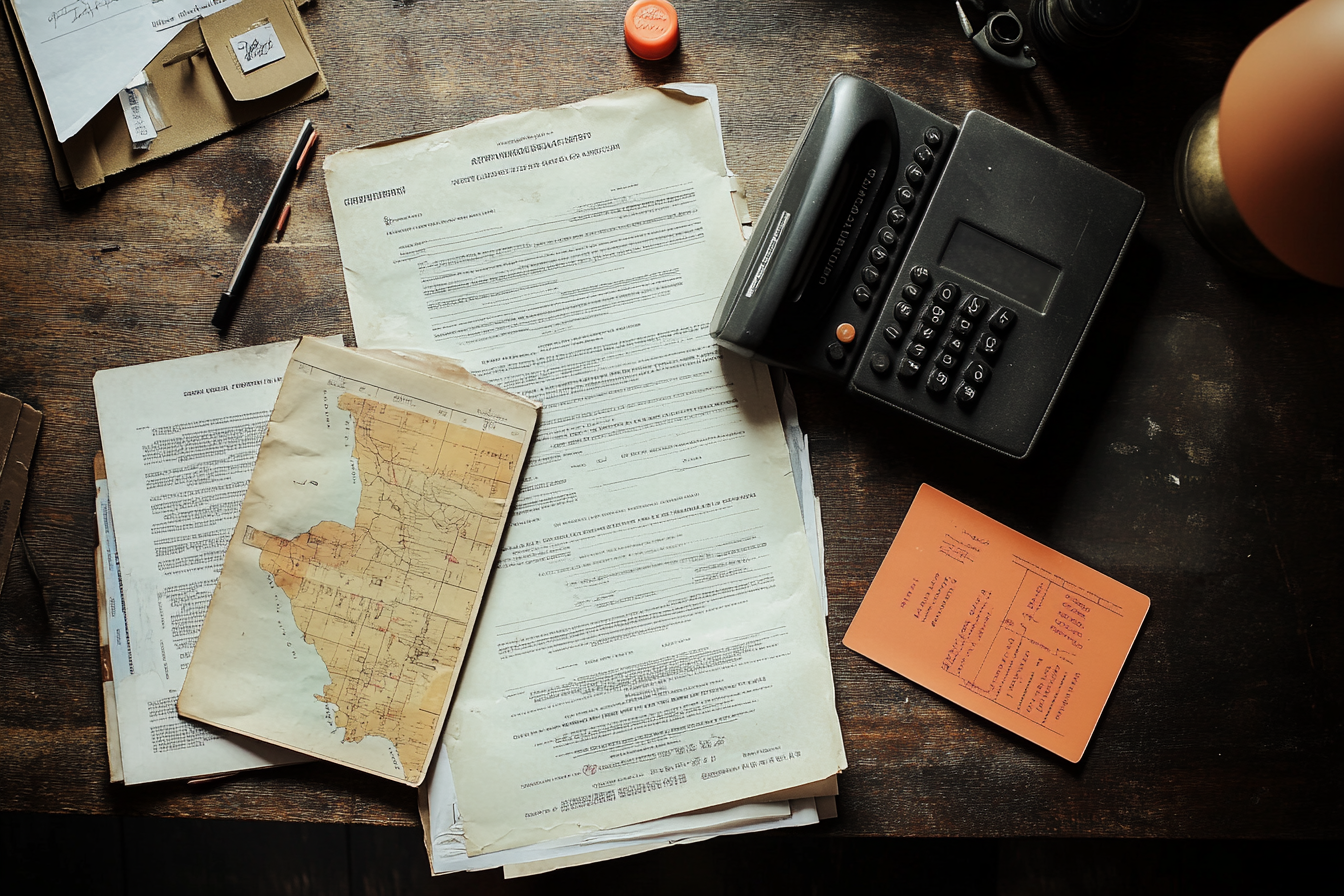
WHAT PEOPLE THINK HAPPENS
Before any of the rest of this makes sense, we have to say what the system is actually for, because almost everyone gets it wrong.
The picture people carry is this: He hits you. You call the police. They come. They arrest him. If he will not stay away, you go to a judge, and you get an order. It is a court order, so the state stands behind it. And if the police ignore it, somebody is accountable for that.
Every step of that is wrong. The Supreme Court has said so three times, and it said so in cases with names and children in them.
JESSICA GONZALES
The first of those names is Jessica Gonzales. She lived in Castle Rock, Colorado, with her three daughters.
On 21 May 1999, a Colorado court issued a restraining order against Simon Gonzales, her estranged husband. He was served on 4 June. He was to stay a hundred yards from the family home.
The back of that form, in capital letters, said this to police: YOU SHALL USE EVERY REASONABLE MEANS TO ENFORCE THIS RESTRAINING ORDER. YOU SHALL ARREST, OR, IF AN ARREST WOULD BE IMPRACTICAL UNDER THE CIRCUMSTANCES, SEEK A WARRANT.
On 22 June, around half past five in the evening, he took their three daughters from outside the house. Leslie was ten. Katheryn was nine. Rebecca was seven. No arrangement had been made for him to have them.
At 7:30, she called the Castle Rock police. Two officers came. She showed them the order and asked them to enforce it. They told her there was nothing they could do, and to call back at ten.
At 8:30, he telephoned her. He had the girls at an amusement park in Denver. She called the police, told them where he was, and asked them to send someone or put out a bulletin. The officer refused. Wait until ten.
At 10:10, she called and said the children were still missing. She was told to wait until midnight.
At midnight, she called again.
At 12:10, she had driven to his apartment herself and found it empty. She called. She was told to wait for an officer. No officer came.
At 12:50 in the morning, she drove to the police station and filed a report in person. The Supreme Court's own opinion records what the officer who took that report did next. He "made no reasonable effort to enforce the TRO or locate the three children. Instead, he went to dinner."
At 3:20 a.m., Simon Gonzales drove to the Castle Rock police station and opened fire with a handgun he had bought that evening. The police shot him dead. Inside his truck, they found all three girls. He had already murdered them.
A SERIES, SERIALLY
They Called It Suicide · 1
The officer went to dinner. Hold on to that, because the state that would not go and look for three living girls with an order in its hand is the same state that, when a body turns up, decides in a single night what it is looking at, and then stops looking.
A young Black man is found hanging from a tree in front of his own house, in a county in the South where everyone knows what a tree and a rope have meant before. Within days the file says suicide.
Willie Andrew Jones Jr. was twenty-one. February 2018, Scott County, Mississippi, a yellow nylon rope, the front yard of his white girlfriend's home. A sheriff's investigator told his mother that same night: "It was suicide. It was nothing else." The branch was measured at seven and a half to nine feet. Willie was five foot eight, with a football injury that stopped him lifting his right arm above his head. The funeral director found the shoulder dislocated, the hair scraped off the back of his head, scratches on his face. A neighbor heard three male voices outside. Six minutes passed between Willie walking into that house and the 911 call.
You do not have to believe anything about what happened to notice that every one of those facts is a reason to look. Even a state that owed him nothing but neutrality would have been curious. The official Black suicide rate is half the white rate, so the fast ruling ran against the odds, not with them. The office that wrote it, in Mississippi, requires of its coroner a high school diploma, a voter registration and twenty-one years of age. In 2021 a civil court found his girlfriend's stepfather responsible for his death and entered judgment for more than eleven million dollars. No criminal charge has ever been filed. The certificate still says suicide.
That is what They Called It Suicide is about. Not the word. What comes after it. Jessica Gonzales asked the state for her daughters while they were alive and got an officer who went to dinner. Willie Jones is the same question from the other end of a life. When the state has failed to protect you and you are dead, does it owe you a look? It does not. It owes you nothing while you live and nothing after, and the people it has decided that about are not random. They are women. They are Black. Ask what the state owes and the list of who it is talking to gets shorter every time.
The whole argument, in one piece →
WATCH
We Gave the State Power to Use Violence
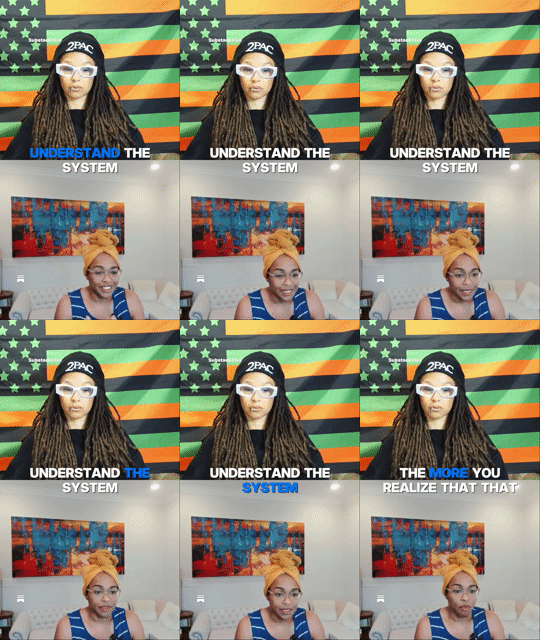
The picture people carry, he hits you, you call, they come, is not naive. It is the bargain. We gave up the right to protect ourselves by force and handed that right to the state, on the promise that it would use the force for us. Castle Rock is the state saying it never signed. This is me, on the They Called It Suicide live, saying what the bargain was.
We ceded our rights on the promise of a benevolent state.
WHAT YOU ARE A PART OF · 2
We Still Don't Understand the Basics
The medical field does not understand how a woman's body works. That isn't rhetoric.
We don't know what triggers labor. We can't reliably diagnose endometriosis, even though it affects roughly one in ten women — and the average delay from first symptom to diagnosis is years long. Most of our disease models are built on male biology, because until 2016 even animal studies routinely excluded female subjects on the grounds that estrous cycles were too noisy to bother with. Our understanding of how hormones and the immune system interact — the systems that shape everything from autoimmune disease to perinatal mood disorders — is rudimentary.
Meanwhile, the conditions that disproportionately affect women — autoimmune disease, chronic pain syndromes, PCOS, perinatal depression, postpartum hemorrhage, severe maternal morbidity — are routinely misdiagnosed, under-researched, or dismissed.
This is not a knowledge gap. A gap implies the work is in progress. This is a structural choice — which questions get asked, which patients get studied, which deaths get audited. The choice has been made, decade after decade, against women.
THE ASK
Where the work lands first.
The community is where the work lands first: the series, the lives, the medical lectures written in clinical context for patients and providers, the pregnancy course, and the playbooks that tell you what to do when the system will not. It is written by clinicians who have sat in the room, for the people who are about to. An account is free. The membership funds the next piece.
UPCOMING
17 September · They Called It Suicide · Live · Pt 5 · The Missing
22 September · Architecture of Harm · Live · Ep. 5 · Chapter 7 · Pregnancy Behind Bars
To see the full schedule — the Collective calendar →
WATCH THE LIVES
Every live from The Economic Body is on the series site, with the deck from each one that has aired.
The Economic Body — the lives, and the deck from each one →
To see the full schedule — the Collective calendar →
NEXT
She sued the town. She lost.
Thank you for being here. Forward this to one person who needs the spine.
— YC
Dr. Yamicia Connor, MD, PhD, MPH · Founder & CEO, Diosa Ara | Creator & Editor-in-Chief, The Labora Collective
